




Starting a nonprofit in Texas means completing three separate legal processes: state incorporation, federal tax-exempt recognition, and Texas state tax exemption. A different government agency handles each with its own forms and filing fees.
This guide walks you through the steps, from naming your organization and forming it with the Texas Secretary of State, to securing federal tax-exempt status and meeting the ongoing compliance requirements.
Nonprofit corporation vs. 501(c)(3)
Most first-time founders don't realize that IRS recognition as a 501(c)(3) organization does not automatically exempt them from Texas franchise and sales taxes.
You form a nonprofit corporation with the Texas Secretary of State. This legally creates your business and allows you to sign contracts, open bank accounts, and hire employees. Nonprofit corporations can apply for federal 501(c)(3) recognition. This is a tax status that makes donations tax-deductible and shields your income from federal taxes.
Furthermore, federal 501(c)(3) recognition is completely separate from Texas franchise and state taxes. The Texas Comptroller controls franchise and state taxes, and can grant exemptions for qualifying nonprofits. You’ll need all three separate statuses to operate as a fully tax-exempt Texas nonprofit.
How to start a nonprofit in Texas: Step by step
Work through these steps in order—each builds on the last.
Step 1: Choose a name for your Texas nonprofit
Your organization's name must be distinguishable from existing entities on record with the Texas Secretary of State, and it must adhere to all rules and regulations governing business names. For example, it cannot imply a purpose inconsistent with your actual mission.
Before you file anything, run a name availability search through the Secretary of State's SOSDirect database or use LegalZoom’s name search tool below. You can also reserve a name for $40 while you prepare your formation documents, though reservation is optional.
Free Texas Business Name Check
Starting a business? Use our free name check tool to search the Texas Secretary of State database and see if your business name is available.
By clicking "Check Availability," I agree to LegalZoom's Terms of Use. This search is a preliminary check of state databases and does not include variations or trademarks. Results do not guarantee name availability or compliance with legal requirements.
Read more in our comprehensive guide to Texas business names.
Step 2: Appoint incorporators, initial directors, and a registered agent
Three distinct roles need to be appointed before you can file.
- Incorporator: The person who signs and submits Form 202. Incorporators don't need to be directors.
- Initial directors: Your nonprofit must have at least three directors under the Texas Business Organizations Code. They don't need to be Texas residents.
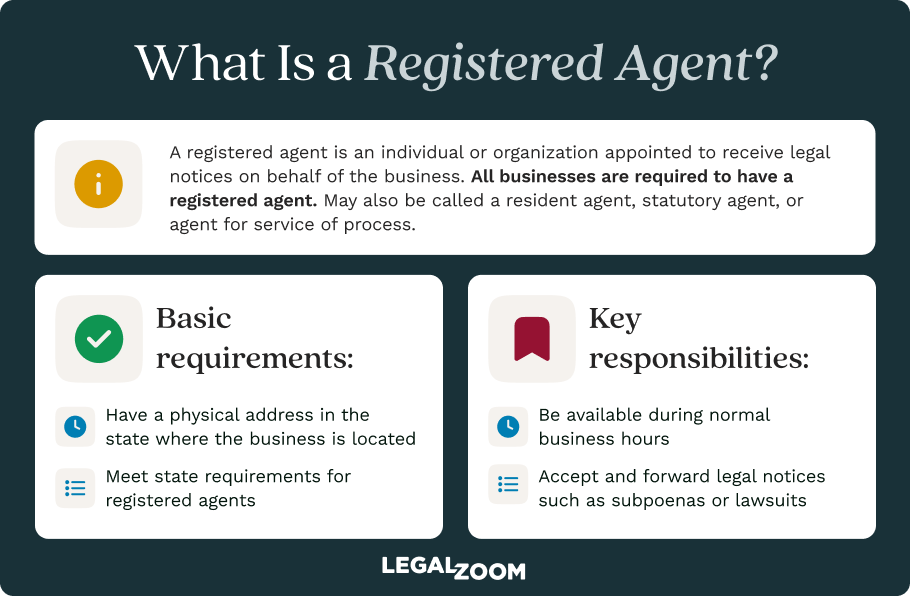
- Registered agent: An individual Texas resident or an authorized business entity that receives legal mail on behalf of your business during business hours, with a physical street address (a P.O. box is not sufficient).
Step 3: File your Texas certificate of formation
Form 202 is Texas's nonprofit articles of incorporation. It is the document that legally creates your organization. You can file it with the Texas Secretary of State online, by mail, or in person. The cost to file is $25.
To fill out Form 202, you’ll need to include your organization name, registered agent name and address, names and addresses of initial directors, organizer signature, and purpose clause. The purpose clause is essential if you plan to seek tax-exempt status with the federal government. It must restrict your activities to one or more exempt purposes under IRS Section 501(c)(3), such as charitable, educational, or religious work.
To submit your certificate of formation online, create an account and upload the completed form via SOSUpload.
Step 4: Draft nonprofit bylaws and hold the organizational meeting
Bylaws are your nonprofit's internal rulebook. You don't file them with the state, but you must adopt them formally, as the IRS will ask for a copy when you apply for 501(c)(3) status.
Your bylaws should cover:
- Purpose and mission. Be consistent with the language in the articles of incorporation.
- Board composition. The Texas Business Organizations Code (Title 2, Chapter 22) outlines how your board must be structured.
- Officer roles and responsibilities. Texas law requires at minimum a president and a secretary, but a treasurer is strongly recommended.
- Meeting procedures. Confirm the frequency, quorum requirements, and how meetings can be called.
- Notice requirements. Include the advance notice required to set a meeting.
- Voting procedures. Establish vote thresholds for major decisions.
- Conflict of interest policy. This policy should require directors and officers to disclose personal financial interests that could conflict with the organization's interests.
- Amendment procedures. Detail what steps need to be taken to amend your nonprofit bylaws.
- Dissolution procedures. The federal government requires a dissolution clause, which states that if the organization dissolves, remaining assets go to another 501(c)(3) or to a government entity for a public purpose.
The organizational meeting is where the board formally adopts the bylaws, elects officers, authorizes a bank account, and approves any initial resolutions needed to operate such as acquiring an employer identification number (EIN). Hold it and document it with signed minutes before moving to the IRS application.
Step 5: Get an EIN from the IRS
An EIN is a federal tax ID—the nonprofit equivalent of a Social Security number. You need it to open a bank account, hire staff, and file your 501(c)(3) application. Apply online at IRS.gov after your certificate of formation is approved.
Step 6: Apply for 501(c)(3) status with the IRS
You'll file either Form 1023-EZ or the standard Form 1023, both submitted electronically through pay.gov. For a deeper look at the application process, see LegalZoom's guide to applying for 501(c)(3) tax-exempt status.
- Use Form 1023-EZ if you project gross receipts of $50,000 or less in each of the next three years and hold total assets of $250,000 or less. The fee to file is: $275 and the typical processing time is 2–4 weeks.
- Use Form 1023 (standard) for larger or more complex organizations. The fee to file is $600 and the processing time is 3–6 months, or longer if the IRS requests additional information.
Once approved, the IRS issues a determination letter confirming your 501(c)(3) status. Keep it as donors, grantmakers, and banks will ask for it repeatedly. This step can be tricky—for personalized help with your 1023-EZ, use LegalZoom’s 501(c)(3) filing service.
Step 7: Apply for Texas state tax exemptions
IRS approval does not automatically exempt your nonprofit from Texas state taxes. You must separately apply to the Texas Comptroller of Public Accounts, and you'll need your IRS determination letter to do it.
Below are two exemptions for which a nonprofit granted 501(c)(3) status can qualify.
For 501(c)(3) organizations, a single form—Form AP-204 (Application for Exemption–Federal and All Others)—covers both the franchise tax exemption and the sales tax exemption. Most 501(c)(3) organizations qualify for both. The sales tax exemption allows the nonprofit to purchase eligible items tax-free and, in qualifying situations, to sell items without collecting sales tax.
Do Texas nonprofits need to register for charitable solicitation?
Texas law does not require most nonprofits to register with the state before soliciting donations. However, three narrow categories of organizations are required to register.
- Law enforcement telephone-related organizations (LETSA): Organizations that engage in telephone solicitation must register with the Texas Office of the Attorney General and pay a $50 fee. If they retain a commercial telephone solicitor, that solicitor must file a $50,000 surety bond with the Texas Secretary of State.
- Public safety organizations (PSSA): Certain public safety organizations, publications, and their solicitors must register, pay a fee, and post a bond with the Secretary of State.
- Veterans organizations (VSA): These organizations and their solicitors must file registration statements with the Texas Secretary of State and pay the required fee. If they use solicitors, they must also post a surety bond, generally $5,000–$25,000 depending on the scope of solicitations.
Some Texas cities and counties also have their own solicitation permit requirements independent of state rules. Before launching a fundraising campaign, particularly door-to-door canvassing or public events in a specific municipality, check with your city or county clerk's office.
Even when registration isn't required, the Texas Attorney General's Charitable Trusts Division has general oversight authority over charitable assets held in trust in Texas. If your organization holds assets restricted by a donor for a specific charitable purpose, the Attorney General's office has jurisdiction to enforce the terms of that trust.
Cost to start a nonprofit in Texas
The cost to start a nonprofit in Texas will depend upon a number of factors, such as which IRS form you file and whether or not you hire a professional registered agent service. Here’s a breakdown of some of the common costs.
- Form 202 (Texas certificate of formation): $25
- Form 1023-EZ: $275
- Form 1023 (standard): $600
- Legal or formation assistance (optional): varies
Factoring in professional assistance and commercial registered agent fees, a realistic all-in range falls between $300 and $1,500 or more, depending on complexity.
Ongoing compliance requirements for Texas nonprofits
Once your nonprofit is up and running, both the IRS and the state of Texas expect recurring filings that keep your organization in good standing. Miss them, and you risk losing the exemptions and legal status you worked to establish.
IRS Form 990: Annual federal information return
Tax-exempt status does not mean tax-filing exempt. The specific form you need to file with the IRS depends on your organization's size.
- Form 990-N (e-Postcard): Available only to organizations with gross receipts normally $50,000 or less.
- Form 990-EZ: Available to organizations with gross receipts less than $200,000 and total assets less than $500,000 at year-end.
- Form 990 (full): Required for organizations with gross receipts of $200,000 or more, or total assets of $500,000 or more at year-end.
Form 990 is due on the 15th day of the 5th month following the end of the organization's taxable year (May 15 for a calendar-year nonprofit). Use Form 8868 to request an automatic six-month extension.
An organization that fails to file a required annual return for three consecutive years automatically loses its tax-exempt status, and the IRS publishes that revocation on a publicly accessible list visible to donors, funders, and grantmakers. For guidance on maintaining tax-exempt status after approval, review the IRS rules carefully.
Texas periodic report: Form 802
Texas nonprofits must file a periodic report listing the names and addresses of all directors and officers. The Secretary of State may require this filing not more than once every four years and will send notice to your registered agent when it's due. The filing fee is $5. Failure to file will result in the involuntary termination of the corporation.
Board meeting minutes
Texas law requires nonprofits to keep records of board meetings. You don't file minutes with any government agency, but you must maintain them internally. Minutes document that the board made decisions properly, which matters during audits, grant reviews, and any legal dispute.
Texas Comptroller obligations
If your nonprofit has employees, you must register with the Texas Comptroller for payroll tax purposes. Your sales tax exemption certificate does not require periodic renewal in most cases, but if your organization's structure, mission, or tax-exempt status changes, notify the Comptroller promptly.
Start your Texas nonprofit with LegalZoom
Starting a nonprofit involves more paperwork, more agencies, and more sequencing decisions than most founders anticipate. LegalZoom has helped more than 100,000 nonprofits get started, and nonprofit formation is one of the most detail-intensive processes we support.
Simple mistakes can delay or block your 501(c)(3) application. LegalZoom's formation process is designed to catch those issues before they become problems. When you’re ready to file your IRS Form 1023-EZ, turn to LegalZoom’s 501(c)(3) filing service.
Texas nonprofit FAQs
How long does it take to start a nonprofit in Texas?
A Texas nonprofit that qualifies for Form 1023-EZ can be fully incorporated and tax-exempt in as little as 6–10 weeks. One that must file the standard Form 1023 should plan for 6–9 months, potentially longer depending on the current IRS backlog and whether the agency requests additional information.
To prevent unnecessary delays, double-check that your application is complete, accurate, and includes all required documentation. If you omit the required purpose or dissolution language from your certificate of formation, your timeline can be set back by weeks.
But you don’t have to wait until you’ve obtained tax-exempt status to move forward. Once your certificate of formation is approved and your EIN is in hand, you can open a bank account, draft grant narratives, build your website, and recruit board members. None of those steps require your determination letter.
What does a Texas nonprofit need before applying for grants?
Being incorporated and tax-exempt gets you in the door, but it doesn't make you grant-ready. Most private foundations, corporate funders, and government grant programs require specific documentation before they'll review your application. Missing one item can disqualify you outright.
- IRS determination letter: Grantmakers will ask for it, and without it, you cannot demonstrate that donations to your organization are tax-deductible.
- An EIN: Grant applications, bank accounts, and government funding portals all require it.
- Adopted bylaws: Grantmakers treat bylaws as evidence that your organization is governed properly. Bylaws that were drafted but never formally adopted, or adopted but never updated, raise red flags during due diligence.
- Current board roster: A current list of directors with names, titles, and contact information demonstrates that your board is active and accountable.
- Most recent IRS Form 990 (or Form 990-N): Funders review this to assess financial health and transparency. For newly formed organizations, a Form 990-N shows you're meeting your federal filing obligations. Established organizations should expect funders to examine multiple years of returns.
- Budget and financial statements: A current operating budget and, for organizations running at least a year, financial statements showing actual income and expenses.
- Mission statement and program descriptions: Having written, board-approved program descriptions ready before you apply saves time and keeps your messaging consistent across applications.
Can I start a nonprofit by myself in Texas?
You can serve as the sole incorporator and file Form 202 on your own, but Texas law requires at least three directors, so you cannot be the only person governing the organization. You must have at least two additional board members who will provide independent oversight.
Can I pay myself if I run a nonprofit?
Yes. Staff members, including the founder or executive director, can receive a salary for work performed. What a nonprofit cannot do is distribute surplus revenue to individuals as profit—all income must be directed back toward the mission.
The IRS pays close attention to compensation paid to founders and people connected to board members, so salaries should be set by the board, documented in meeting minutes, and benchmarked against comparable roles at similarly sized organizations.
What is the difference between a Texas nonprofit corporation and an unincorporated nonprofit association?
A Texas nonprofit corporation is a formal legal entity created by filing Form 202 with the Texas Secretary of State. It exists separately from its founders and directors, can enter contracts in its own name, own property, and limits the personal liability of its members and directors.
An unincorporated nonprofit association is a group of people acting together for a common nonprofit purpose without filing any formation documents. Texas recognizes them under the Business Organizations Code, and they can hold property and enter contracts. However, their members and leaders may face greater personal liability, and they are generally not eligible for 501(c)(3) status without first incorporating. For most founders who intend to raise funds, hire staff, or apply for grants, incorporation is the right path.
Does Texas have its own nonprofit corporation law?
Yes. Texas nonprofits are governed primarily by the Texas Business Organizations Code (BOC), Title 2, which sets the rules for how nonprofit corporations are formed, governed, and dissolved. The BOC covers director duties, officer requirements, member rights, and procedures for amending governing documents.
Edward A. Haman, Esq., contributed to this article.
'%20/%3e%3c/svg%3e)

'%3e%3cpath%20fill-rule='evenodd'%20clip-rule='evenodd'%20d='M9.31239%2025.5316H13.0679V14.1032H9.31239V25.5316ZM11.1913%208.46875C9.93945%208.46875%209%209.25086%209%2010.505C9%2011.5995%209.78211%2012.5389%2011.1913%2012.5389C12.6005%2012.5389%2013.3826%2011.5995%2013.3826%2010.505C13.3826%209.4082%2012.6005%208.46875%2011.1913%208.46875ZM27%2018.9577V25.5316H23.2445V19.4275C23.2445%2017.8609%2022.6174%2016.7664%2021.3679%2016.7664C20.2711%2016.7664%2019.644%2017.5463%2019.3316%2018.1756C19.1743%2018.488%2019.1743%2018.8004%2019.1743%2019.1128V25.5316H15.4165V13.9458H19.1743V15.5123C19.644%2014.7302%2020.5835%2013.6357%2022.6174%2013.6357C25.1234%2013.7908%2027%2015.3573%2027%2018.9577Z'%20fill='white'/%3e%3c/g%3e%3cdefs%3e%3cclipPath%20id='clip0_952_9489'%3e%3crect%20width='18'%20height='18'%20fill='white'%20transform='translate(9%208)'/%3e%3c/clipPath%3e%3c/defs%3e%3c/svg%3e)



