.
.





LLCs are one of the most popular business structures in Florida, but before you start one, it helps to understand how the process works and what responsibilities continue after approval. Our guide breaks down what you need to know to get your Florida LLC off to the right start.
Key takeaways
- You form a Florida LLC by filing articles of organization with the Florida Division of Corporations (Sunbiz) and paying a $125 filing fee.
- Florida offers an optional $25 name reservation and a separate fictitious name (DBA) process that costs $50 plus a newspaper publication step.
- You’ll need to decide whether your Florida LLC will be member-managed or manager-managed before you fill out your articles of organization.
- Florida requires every LLC to file an annual report with Sunbiz. It's due May 1 each year, costs $138.75, and comes with a $400 penalty if you're late.
Step 1: Name your Florida LLC and check availability
First, make sure you’re aware of Florida’s business name requirements. One of the most important rules is that your business name must be distinguishable from all other registered Florida companies.
To check, search the Sunbiz business name database before filing. If the only difference between your name and an existing one is something small, such as the designation ("LLC" versus "Inc.") or a comma, Sunbiz generally treats them as identical. Search as many variations as you need with LegalZoom's tool to search Florida business names for free.
Free Florida Business Name Check
Starting a business? Use our free name check tool to search the Florida Secretary of State database and see if your business name is available.
By clicking "Check Availability," I agree to LegalZoom's Terms of Use. This search is a preliminary check of state databases and does not include variations or trademarks. Results do not guarantee name availability or compliance with legal requirements.
What naming rules does Florida require for LLCs?
In addition to being distinguishable, your Florida LLC name:
- Must include an LLC designator ("limited liability company," "LLC," or "L.L.C.”)
- Can’t suggest that the LLC is organized for a purpose that Florida law or its articles of organization don’t authorize
- Can’t imply a connection with a state or federal government agency or another federally chartered organization
A name that is not distinguishable from another may be allowed if the two names are not identical and the existing entity provides written consent.
Can you reserve your Florida LLC name before filing?
You can reserve your name if you're not quite ready to file, but this is entirely optional. You can reserve a name for 120 days by submitting a signed letter (the desired entity name plus your name and address) to the Secretary of State and paying a $25 fee.
Do you need a Florida fictitious name (DBA) for your LLC?
If you’ll operate under a name different from what’s on your articles of organization, you’ll need to register a fictitious name through Sunbiz. The registration costs $50, and you must certify that you advertised the name at least once in a newspaper in the county where your principal place of business is or will be located. You don’t need to submit proof of publication to the state.
A fictitious name registration lets your LLC do business under another name—for example, Coastal Cleaners doing business as Coastal Home Repairs—but it doesn’t create a new business or give you ownership rights to the name. The registration is valid through December 31 of its fifth calendar year and must be renewed through Sunbiz.
Step 2: Choose a registered agent in Florida
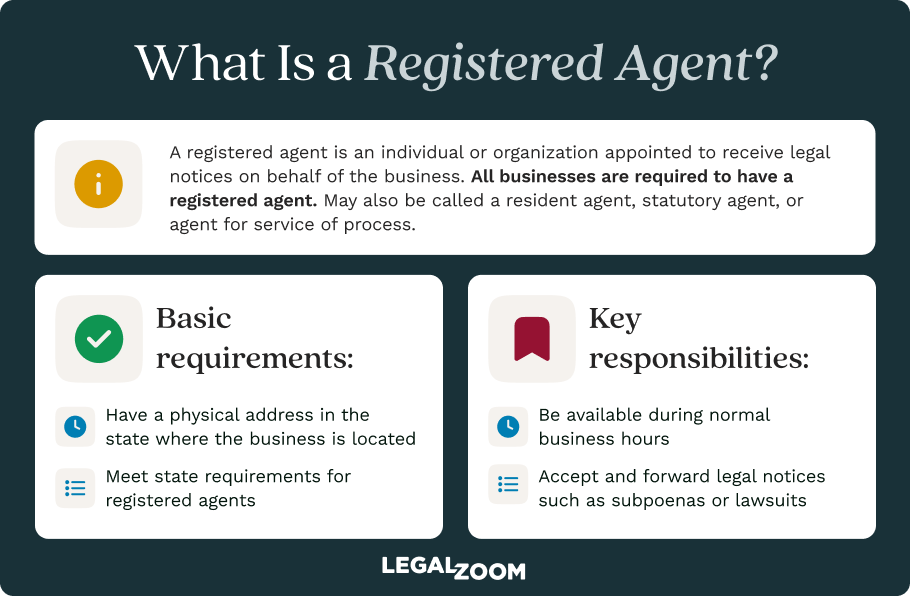
Florida requires every LLC to appoint a registered agent with a physical street address in the state. Your registered agent is your LLC's official point of contact for lawsuits, subpoenas, and other legal paperwork.
What are the registered agent requirements for a Florida LLC?
Your registered agent must have a physical Florida street address, not a P.O. box. The registered agent must also formally accept the appointment in writing with your articles of organization.
Your registered agent can be:
- A Florida resident whose business address matches the registered office
- A domestic business entity authorized to operate in Florida
- A foreign business entity authorized to transact business in Florida
An LLC can’t serve as its own registered agent, but an owner can be its LLC’s own registered agent if they have a Florida street address and can reliably receive legal papers there. But if you travel, work irregular hours, or miss a delivery, you could miss an important notice, which may eventually lead to a default judgment. A professional service can make sense if you want to keep your address off the public record or have someone consistently receive and forward your legal mail.
Step 3: Decide whether your Florida LLC will be member-managed or manager-managed
Sunbiz requires you to designate whether your entity is member-managed or manager-managed in your articles of organization. In general:
- In a member-managed LLC, owners run daily operations themselves.
- In a manager-managed LLC, owners appoint one or more managers to handle operations.
Florida LLCs are member-managed by default. If you want managers to run the business instead, your operating agreement or articles of organization must expressly say so. However, you don’t have to list who those people are. Florida’s articles of organization instructions state that managers’ or authorized representatives’ names are optional, and that members should not be listed. Any information you submit becomes part of the public record and may be searchable through Sunbiz.
Step 4: File your articles of organization with Sunbiz
The articles of organization document formally establishes your LLC with the state by laying out basic information about your business.You can either file the document online through Sunbiz or mail the form to the address listed on the second page.
What information do you need to include in the Florida LLC articles of organization?
You’ll need to provide:
- LLC name
- Principal office address and, if different, mailing address
- Registered agent name and registered office address
- Registered agent’s acceptance
- Correspondence name and email address
- Effective date, if applicable
- Additional provisions or purpose, if applicable
- Names and addresses of managers or authorized representatives, if applicable
- Signature of at least one member or an authorized representative of a member (see Sec. 0203 for more details)
Finally, review the information carefully before submitting. Incomplete fields or inaccurate information can lead to a rejected filing.
What is the effective date rule for a Florida LLC filing?
Your LLC generally becomes effective when the Division of Corporations accepts and files your articles of organization. But, you can request an alternate effective date up to five business days before filing or up to 90 days after filing.
If you don’t need to delay or backdate your LLC, leave the effective-date field blank. If you’re filing late in the year and don’t plan to begin operating until the following year, keep in mind that an eligible January 1 effective date may postpone your first annual report by one calendar year.
How long does it take to get an LLC approved in Florida?
It typically takes a few days to a week to process new business filings, depending on how you file. The Division of Corporations processes filings in the order received, so check its current processing dates page for the most accurate estimate.
Once your filing is approved, online filers receive confirmation by email, while mail filers receive confirmation by mail. You can also search your business name through Sunbiz after the filing is posted.
Step 5: Create a Florida LLC operating agreement
An operating agreement is a document that outlines the way your LLC will conduct business. It defines things like ownership structure, member responsibilities, and profit-sharing to prevent future disputes or inform court decisions should a dispute arise.
Florida doesn't require your LLC to file an operating agreement, but it's wise for every business to have one. Without one, the courts make determinations based on state law, which may not align with the best interests of the LLC or its members.
What should you include in a Florida LLC operating agreement?
Your Florida LLC operating agreement can include, but is not limited to, the following:
- LLC's name and principal address
- Name and addresses of LLC members
- Duration of the LLC (if it has a specific end date)
- Name and address of the registered agent
- Formation date
- Purpose of the business
- Members and their contributions
- Each member's ownership stake in the company, voting rights, and profit share
- The way profits and losses will be divided
- Procedure for admitting new members, as well as outgoing members
- Management of the LLC
- Dissolution terms
- Indemnification and liability clauses
If you're unsure where to begin, starting with a professionally crafted Florida LLC operating agreement template can help you cover the basics and organize your business structure effectively.
Step 6: Get an EIN for your Florida LLC
Most Florida LLCs need an employer identification number (EIN) from the IRS, essentially your business's Social Security number, used by banks, payroll providers, and the IRS. Applying is free and takes a few minutes on the IRS website.
You'll need it before opening a business bank account, hiring employees, applying for certain licenses, or filing certain taxes as an LLC. Single-member LLCs with no employees can technically use the owner's Social Security number for some filings, but most Florida banks will still require an EIN.
How much does it cost to start an LLC in Florida?
The cost of a Florida LLC starts at $125, but that only covers the filing fee. There are other optional and ongoing fees to plan for as well. A
| Cost | Amount |
|---|---|
| Articles of organization | $125 |
| Name reservation (optional) | $25 |
| Fictitious name (DBA) registration (optional) | $50 + newspaper publication cost |
Ongoing Florida LLC compliance
Forming your LLC is only the beginning. To keep it active and ready to operate, you’ll need to stay current on annual reports, taxes, licenses, and permits.
File your annual report on time
Every Florida LLC must file an annual report to maintain active status with the Division of Corporations. The report is due between January 1 and May 1 of the calendar year after the LLC’s filing or effective date, and the filing fee is $138.75. If you miss the May 1 deadline, Florida adds a $400 late fee. An LLC that still hasn’t filed by the third Friday in September may be administratively dissolved.
File taxes
Florida doesn’t have personal income taxes, but your LLC may still have federal and state tax obligations based on its business activities, employees, and tax classification.
For instance, if you have employees, you'll likely need to register for Florida's reemployment tax through the Department of Revenue, and workers' comp coverage may apply once you cross the state's employee threshold.
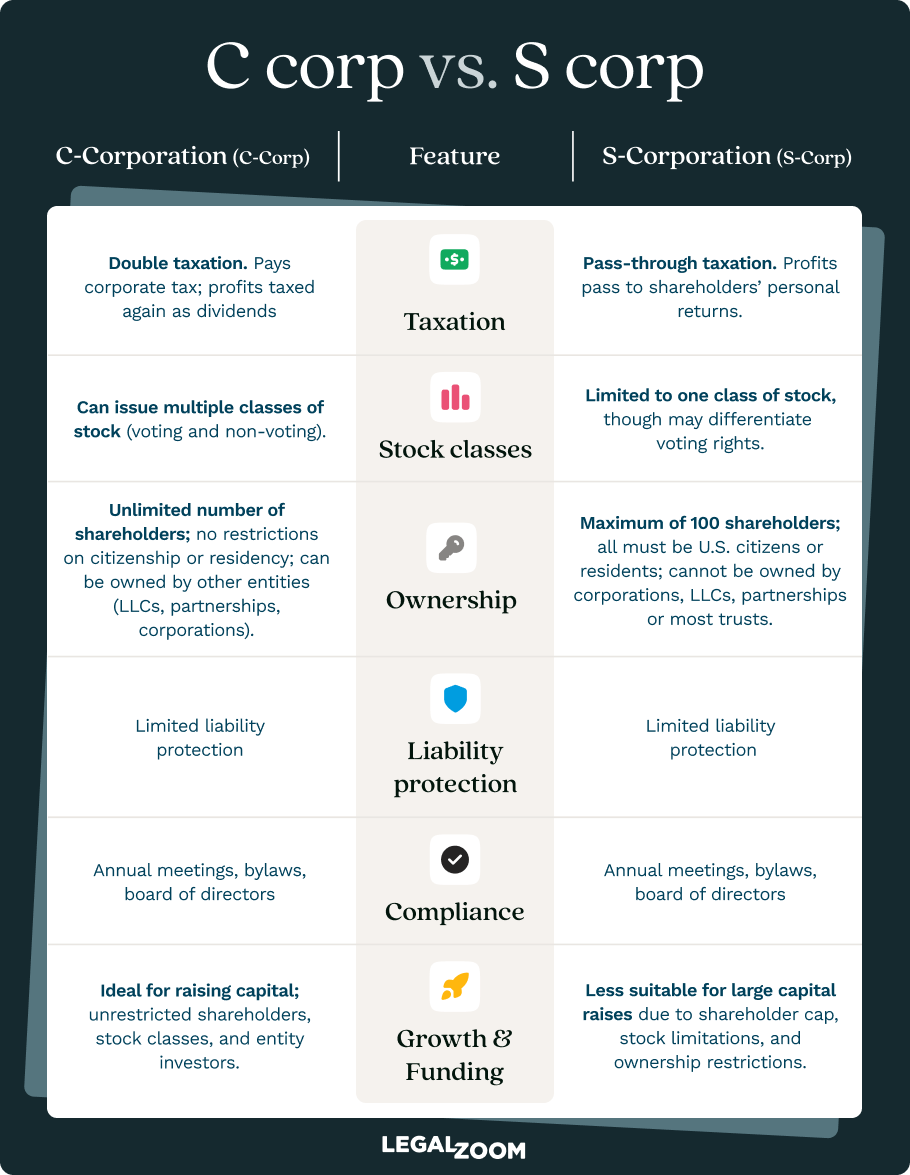
If you sell taxable goods or certain services, you'll need to register to collect and remit sales tax. LLCs that elect C corp or S corp taxation with the IRS may also owe Florida's corporate income tax. If you’re unsure whether you should opt for a different tax election, a Florida CPA can help you figure out which structure fits your income and goals.
Get licenses and permits
Florida doesn’t have a general business license, but you may still need specific licenses depending on your industry and location. For example, a professional service may require a state license, while a restaurant may need health permits. Your county or city may also require a local business tax receipt.
Check with the appropriate Florida licensing agency and your county tax collector or city clerk before you start operating.
Risks of filing an LLC yourself in Florida
Filing articles of organization for a Florida LLC is relatively easy. You’ll provide basic information, pay the $125 required state filing fee, and submit the paperwork through Sunbiz. The harder part is keeping your LLC in good standing after it’s approved. If you take the DIY route, keep the following risks in mind.
- Missing Florida’s annual report deadline. This report is due by May 1 each year and costs $138.75. Miss the deadline, and Florida adds a $400 late fee. If the report still isn’t filed by the third Friday in September, the LLC may be administratively dissolved on the fourth Friday.
- Serving as your own registered agent. If legal papers go to an outdated address or you’re just unavailable, you could miss a court deadline and risk a default judgment. Plus, your address is publicly accessible in the state’s records.
- Skipping a written operating agreement. Without one, Florida’s default rules may control important decisions that you and your co-owners never discussed, including management, voting, ownership changes, and what happens when a member leaves.
- Using an unregistered fictitious name. If your LLC operates under a different business name without registering it, you may be unable to bring a court action in Florida until you comply. Registration doesn’t invalidate your contracts, but it also doesn’t give you ownership rights to the name.
How to start your Florida LLC with LegalZoom
Instead of navigating the entire process yourself, let LegalZoom handle your Florida LLC formation. We’ll collect your business details, file your articles of organization with the Division of Corporations, and confirm approval once Sunbiz finishes processing.
LegalZoom also offers Florida registered agent service, so your address never has to hit the public Sunbiz record, plus annual report reminders to help you avoid that $400 late penalty. Simply start your LLC online with LegalZoom, and we’ll help you handle the filing details covered in this guide.
Find the right state to form an LLC
Find the right state to form an LLC
Every state has different rules, costs, and considerations for LLC formation.


Florida LLC FAQs
What are the advantages and disadvantages of a Florida LLC?
An LLC can protect you from personal liability for many business debts, offer flexible management, and allow pass-through federal tax treatment. Florida also doesn’t impose a personal income tax. The tradeoffs include formation costs, annual report fees, expensive late fees, ongoing compliance responsibilities, and liability risks if the rules aren’t followed.
What happens if you start an LLC and do nothing?
Your Florida LLC won’t simply disappear. If you leave it active, you’ll still need to maintain a registered agent and file annual reports. Ignoring those responsibilities can lead to a $400 late fee and administrative dissolution. Depending on your business activities and tax classification, tax or licensing obligations may also continue. If you no longer plan to use the LLC, formally dissolve it through Sunbiz instead of letting it fall out of compliance.
Does a Florida LLC have to file a state tax return?
Not necessarily. Florida has no personal income tax, and a single-member LLC that’s disregarded for tax purposes generally doesn’t file a separate Florida corporate income-tax return. An LLC taxed as a corporation must file a Florida corporate income-tax return, while an LLC taxed as a partnership may have other state filing obligations in certain situations.
Your LLC may also need to register for or file sales-tax or reemployment-tax returns, depending on its activities and employees.
Is Florida registered agent information public?
Yes. The registered office address and other information submitted to Sunbiz become public records, meaning using your home or office address could make it publicly available. Because of privacy concerns, you might consider using a professional registered agent service, which uses its own business address to receive legal mail for you.
How much money should you have before starting an LLC in Florida?
Florida sets no minimum capital requirement. Realistically, budget for the $125 filing fee, the $138.75 annual report due within your first year, and any optional costs like name reservation ($25) or fictitious name registration ($50 plus publication). That's roughly $265 to $340 before you spend a dime on the actual business.
Beyond filing fees, most advisors recommend keeping three to six months of operating expenses in reserve. Florida doesn't require this, but an LLC with no cushion struggles to keep the separation between business and owner that its liability protection depends on.
'%20/%3e%3c/svg%3e)

'%3e%3cpath%20fill-rule='evenodd'%20clip-rule='evenodd'%20d='M9.31239%2025.5316H13.0679V14.1032H9.31239V25.5316ZM11.1913%208.46875C9.93945%208.46875%209%209.25086%209%2010.505C9%2011.5995%209.78211%2012.5389%2011.1913%2012.5389C12.6005%2012.5389%2013.3826%2011.5995%2013.3826%2010.505C13.3826%209.4082%2012.6005%208.46875%2011.1913%208.46875ZM27%2018.9577V25.5316H23.2445V19.4275C23.2445%2017.8609%2022.6174%2016.7664%2021.3679%2016.7664C20.2711%2016.7664%2019.644%2017.5463%2019.3316%2018.1756C19.1743%2018.488%2019.1743%2018.8004%2019.1743%2019.1128V25.5316H15.4165V13.9458H19.1743V15.5123C19.644%2014.7302%2020.5835%2013.6357%2022.6174%2013.6357C25.1234%2013.7908%2027%2015.3573%2027%2018.9577Z'%20fill='white'/%3e%3c/g%3e%3cdefs%3e%3cclipPath%20id='clip0_952_9489'%3e%3crect%20width='18'%20height='18'%20fill='white'%20transform='translate(9%208)'/%3e%3c/clipPath%3e%3c/defs%3e%3c/svg%3e)