.
.





New Hampshire calls its formation document a certificate of formation, and you file it with the Secretary of State's Corporation Division. This guide walks through choosing your LLC name, appointing a registered agent, completing the certificate of formation, and tracking annual report deadlines to help keep your business in good standing.
Key takeaways
- New Hampshire forms LLCs by filing a certificate of formation. The state fee is $100, plus $2 for online filing.
- Online name searches are preliminary—the Secretary of State makes the final availability decision.
- Every LLC must maintain a New Hampshire registered agent and registered office.
- A written operating agreement isn’t filed with the state, but it can establish the LLC’s internal rules.
- The first annual report is generally due between January 1 and April 1 of the following calendar year, with a $100 fee and a $50 late fee.
Step 1: Choose and reserve your New Hampshire LLC name
New Hampshire reviews a proposed LLC name against existing registrations when you file. A name that is not different enough from another registered name may be rejected, so treat an online search as a preliminary check rather than confirmation that the name is available.
Your LLC's name must include "Limited Liability Company," "LLC," or "L.L.C."
If you want to use words such as "bank," "insurance," and "university" you must have the required license or approval. Names that imply government affiliation or an unauthorized purpose may also be rejected. No matter what, your name must be distinguishable from every other business entity on file with the Secretary of State.
Be sure to check your business’ name against the Secretary of State’s database before you register. Use LegalZoom’s free New Hampshire LLC name search tool to search for your preferred name or close variations of it. If another business is using your name or one that’s confusingly similar, you’ll want to choose a different name.
Free New Hampshire Business Name Check
Starting a business? Use our free name check tool to check your business name against the New Hampshire Secretary of State records.
By clicking "Check Availability," I agree to LegalZoom's Terms of Use. This search is a preliminary check of state databases and does not include variations or trademarks. Results do not guarantee name availability or compliance with legal requirements.
Do I need to register a trade name if I want to operate under a different name?
Yes. New Hampshire requires businesses operating under a name different from the one under which they registered to file for a trade name. This registration is separate from your initial LLC formation and shouldn’t be completed until after your certificate of formation is accepted. Check out filing a DBA in New Hampshire for that process.
Can I reserve my LLC name before filing in New Hampshire?
Yes. File an application for reservation of name with the C orporation Division, pay $15, and New Hampshire holds your name for 120 days. That buys you time to line up a registered agent, draft an operating agreement, or handle other startup tasks before someone else grabs it. You can renew for additional 120-day stretches if you need to.
Name reservation is optional. Many filers skip it and put the name directly on their certificate of formation.
Step 2: Appoint a New Hampshire registered agent
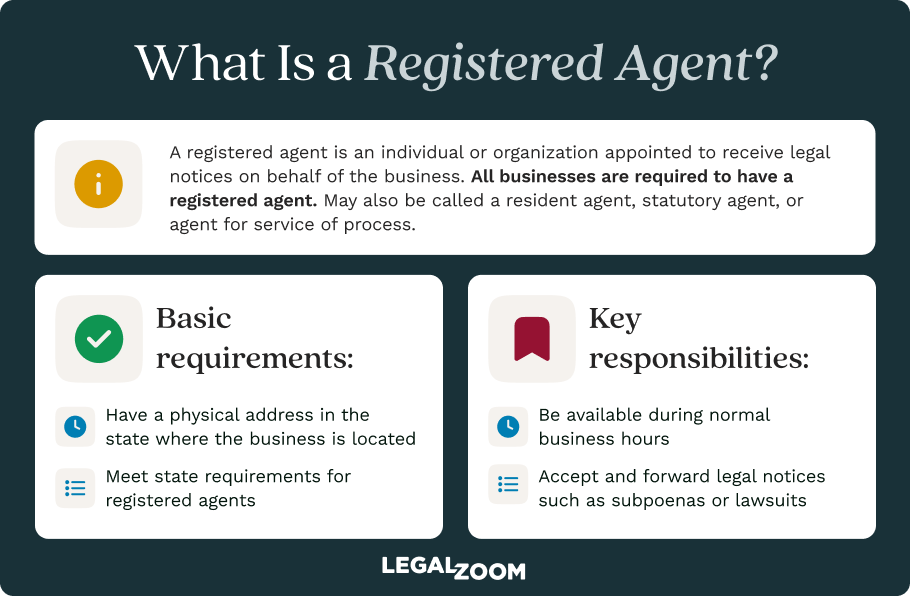
New Hampshire law requires every LLC to name a registered agent and registered office. The agent must meet the state's eligibility requirements, including accepting service of process (formal notice that your business is being sued). The agent and registered office appear on the certificate of formation.
Do I need a registered agent for a New Hampshire LLC?
Yes. All registered business entities in New Hampshire must maintain a registered agent and registered office. If the registered agent resigns or is changed without notifying the state, the business can miss important notices or service of process and may fall out of good standing.
Who can serve as a registered agent in New Hampshire?
The eligible registered agent must be one of the following:
- An individual living in New Hampshire whose residential or business address becomes the registered office
- A domestic corporation, LLC, or limited liability partnership
- A foreign corporation, LLC, or limited liability partnership authorized to do business in New Hampshire
In practical terms, the agent could be you if you live in the state, a co-owner or employee with a New Hampshire address, a friend or family member willing to take on the role, or a professional registered agent service.
The registered office must be a physical New Hampshire street address, not a P.O. box.
What are the risks of being my own registered agent in New Hampshire?
You can serve as your own agent if you meet the eligibility rules. Because the registered agent's name and registered office are part of the public business record, using a home or office address may reduce privacy.
Availability matters because service of process and official notices must be received at the registered office. New Hampshire does not establish a universal "9 to 5" attendance rule, but choose an agent or service with a dependable process for receiving documents when they are delivered.
A professional registered agent service may be worth the cost if you want to keep a home address off the public record and have a consistent process for receiving documents. It does not guarantee that every notice is handled perfectly, so keep the state record and your service arrangement current.
Step 3: File your certificate of formation with the New Hampshire Secretary of State
Filing the certificate of formation creates your New Hampshire LLC. After acceptance, keep the approved record with your business documents and follow through on separate finances and other formalities that help support the liability shield.
What form do I file to start an LLC in New Hampshire?
Form LLC-1, the certificate of formation, is filed with the Corporation Division either online through NH QuickStart or by mail. The form must be signed and delivered by an authorized person, but that signer does not have to be a member. Always make sure to download the most recent form if you file by paper.
What information do I need to complete the New Hampshire certificate of formation?
Before completing Form LLC-1, gather the following information.
- LLC name: The proposed name, including the required designator.
- Principal office address: A street address, not a P.O. box.
- Mailing address: Only if different (a P.O. box works here).
- Registered agent name and address: Their New Hampshire street address as the registered office.
- Business purpose: A general statement works fine, something like "any lawful business purpose".
- Management structure: Member-managed or manager-managed.
- Effective date: Immediate or delayed, but a delayed date cannot be later than the 90th day after filing.
- Authorized person's signature: The person signing and delivering the record.
Before you submit it, check every field for accuracy. A complete, internally consistent filing helps avoid a rejection or request for correction.
How do I file my certificate of formation online using NH QuickStart?
Go to quickstart.sos.nh.gov, create an account, enter your LLC's details, attach anything required, and pay with a credit or debit card.
Online filing costs $102, which covers the $100 base fee and a $2 electronic handling charge. Track your status through the same portal afterward.
Can I file my New Hampshire certificate of formation by mail or in person?
Yes. Mail your completed form with a check or money order to:
Secretary of State, Corporations, State House, Room 204, 107 North Main Street, Concord, NH 03301
You can send the filing by USPS or a private carrier such as UPS or FedEx. Make checks payable to "State of New Hampshire." Mail filing costs $100.
Walk-in filing is available at the Concord office during business hours. The Secretary of State lists in-person expedited service for an additional $25.
How long does it take to get an LLC approved in New Hampshire?
Processing times vary by filing type and time of year. Check the Secretary of State's QuickStart announcements for current expectations. If timing matters, ask the Corporation Division whether in-person expedited service is available and what fee applies.
Even with expedited service, timing can vary, so if you’re in a rush, make sure everything is filed correctly the first time.
What information becomes public when I form a New Hampshire LLC?
Once approved, the following becomes searchable on the Secretary of State's database: your LLC's name, principal office address, registered agent's name and address, management structure, and the organizer's name.
New Hampshire doesn't require you to list individual member names or ownership percentages on the certificate of formation, so your personal ownership stake generally stays private, even though your registered agent's address doesn't. For that reason, some owners hire a professional registered agent instead of placing a home address on the form.
Step 4: Create a New Hampshire LLC operating agreement
Your certificate of formation creates the LLC, but it does not set the rules for day-to-day decisions. A written operating agreement can address ownership, voting, distributions, management, and what happens if a member leaves.
Do I need an operating agreement for a New Hampshire LLC?
No written operating agreement is legally required, and you do not file one with the state. Without one, your LLC defaults to the rules in RSA Chapter 304-C, which covers profit allocation, management, and dissolution. Those rules may not align with what you and your co-owners intended.
New Hampshire law is flexible: Under RSA 304-C:40, an operating agreement can be written, oral, or implied by the members' conduct. In practice, that flexibility can create problems, as it can be difficult to prove what an oral agreement said once members disagree, and banks often want a written copy before opening an account for the business.
If your ownership setup is more complicated than one person, have a New Hampshire business attorney review the agreement before anyone signs.
What should a New Hampshire LLC operating agreement include?
Your operating agreement should include the following information.
- Ownership percentages: Who owns what share of the LLC.
- Voting rights and decision-making: Your agreement can set different voting rules or require unanimous consent for major decisions.
- Management structure: Member-managed or manager-managed, matching your certificate of formation.
- Profit and loss distribution: State clearly how profits and losses are allocated and when distributions may be made.
- Capital contributions: Each member's contribution and what happens if more money is needed later.
- Membership changes: Processes for when a member joins, exits, sells their stake, or passes away.
- Dissolution terms: The process for winding the LLC down if you ever choose to close your doors.
- Registered agent information: Note your agent's role within the agreement itself.
Have every member sign the agreement and keep a copy. You won't file it with the state, but a bank, lender, or investor may ask to see it.
Step 5: Obtain an EIN for your New Hampshire LLC
After the LLC is formed, decide whether it needs an employer identification number (EIN) from the IRS. The IRS says to form the entity with the state before applying, then apply directly with the IRS for free. An EIN may be useful or necessary for employees, certain tax elections, banking, or state tax administration, even when a single-member LLC can otherwise use the owner's SSN for federal income tax reporting.
Apply directly at IRS.gov or let LegalZoom’s EIN service handle the application for you.
Does a single-member New Hampshire LLC need an EIN?
A single-member LLC with no employees may generally use the owner's Social Security number for federal income tax reporting, but it may still obtain an EIN for banking or state tax purposes. Ask your bank what it requires rather than assuming every bank will refuse an account without one.
If you hire an employee, add a partner, or elect corporate tax treatment, the IRS requires an EIN. Many single-member owners apply at formation so they already have one if their needs change.
Step 6: Register for New Hampshire state taxes and business licenses
After your LLC is formed, check which state tax registrations and business licenses apply to the way you operate. New Hampshire does not impose a general business license, but tax obligations and industry or local permits can apply depending on your revenue, activities, employees, and location.
Does New Hampshire have a state income tax for LLC owners?
New Hampshire doesn't tax wages, and it’s one of nine states with zero personal income tax. LLC members owe no state income tax on business income that passes through to them personally.
The business itself may still owe several taxes.
- Business Profits Tax (BPT): 7.5% on net taxable profit, but you only file if gross business income tops $109,000. The Department of Revenue Administration adjusts this threshold every two years.
- Business Enterprise Tax (BET): 0.55% of the enterprise value tax base (all compensation, interest, and dividends paid or accrued). Filing kicks in once gross receipts or the enterprise value base exceeds $298,000.
These thresholds are filing thresholds, not a guarantee that an LLC owes no tax or that no registration is needed. Check the Department of Revenue Administration's current instructions to determine whether your business must register, file, collect a tax, or obtain a tax license.
What business licenses or permits do I need in New Hampshire?
New Hampshire does not have a general statewide business license for every LLC. Your business may still need state tax licenses, industry-specific licenses, local permits, or Secretary of State registration, depending on its activities and location.
Building a business is enough work as it is. We'll help you start your LLC with confidence.

New Hampshire LLC filing fees and costs
Budget for the state filing fee as well as annual compliance and any optional services your LLC uses. The amounts below separate state charges from online handling and expedited-service fees, so you can plan the cost of forming and maintaining the business.
| Fee type | Amount |
|---|---|
| Certificate of formation | $100 mail or in-person; $102 online |
| Name reservation (optional) | $15 |
| Annual report | $100 mail; $102 online |
| Annual report late fee | $50 additional |
| Expedited service | $25 additional |
These are the base filing fees required to form an LLC. Most founders should also budget for attorney and accountant fees, a registered agent service, and any other permits or licenses the business may need.
The risks of filing a New Hampshire LLC yourself
Filing a New Hampshire LLC yourself can be straightforward for a simple business, but the process has state-specific risks beyond completing a form. You are responsible for confirming name availability, choosing an eligible registered agent, completing the filing correctly, and keeping the LLC in good standing after formation.
- Name availability risk: New Hampshire's QuickStart search shows existing registrations, but Corporation Division staff make the final determination when they review the filing. A name that appears clear in the search can still be rejected if it is not distinguishable.
- Registered agent and public information risk: Every LLC must maintain an eligible New Hampshire registered agent and registered office, and that information appears in the public business record. An outdated agent or office can cause service of process and other official notices to go to the wrong place.
- Filing and effective date risk: Form LLC-1 must include the required information and an authorized signature. An incomplete filing, an incorrect management choice, or a delayed effective date beyond the 90th day can delay formation or require correction.
- Cost and timing risk: The state formation fee is $100, online filings add a $2 electronic handling charge, and in-person expedited service can add $25 when available. Processing varies by filing type and time of year, so a DIY filer can misbudget the filing or assume a faster approval than the state promises.
- Ongoing compliance risk: After formation, the LLC must track annual reports, tax and employer obligations, and any licenses or permits that apply to its activity. A late annual report adds a $50 fee and can result in loss of good standing; repeated noncompliance can eventually lead to administrative dissolution.
How to start your New Hampshire LLC with LegalZoom
Six formation steps, a detailed fee table, and New Hampshire's annual report rules add up to a lot to track while you're starting a business. LegalZoom can take much of the filing work off your plate, starting with our LLC formation services. Here's what LegalZoom can provide for your New Hampshire LLC:
- LLC formation services. Answer questions online about your business name, address, and ownership structure. LegalZoom prepares and files your certificate of formation with the New Hampshire Secretary of State.
- Registered agent service. Depending on your package, you may add registered agent service to help receive official notices for your LLC.
- Operating agreement support. Depending on your package, you may receive an operating agreement template to help document ownership, management, and other internal rules.
- Filing status and error support. LegalZoom tracks your filing status and, if the filing is rejected or incorrect because of our error, we fix it with the state at no extra charge.
- Guidance after formation. Get your approved formation documents along with guidance on next steps, including an EIN and New Hampshire's annual report deadline.
For a straightforward New Hampshire LLC, LegalZoom can make the filing process easier. If your ownership structure is complicated, consider consulting an attorney.
Find the right state to form an LLC
Find the right state to form an LLC
Every state has different rules, costs, and considerations for LLC formation.


New Hampshire LLC FAQs
How do I dissolve a New Hampshire LLC?
File a certificate of cancellation with the Corporation Division after winding up the business, addressing debts, and distributing remaining assets. Continue required filings until the cancellation is accepted, and use the current state instructions so future annual reports and fees do not accrue.
How do I change a New Hampshire LLC's registered agent?
File the Secretary of State's current statement for a change of registered office or registered agent, provide the required current and successor information, and pay the current $15 filing fee. Do not wait for an annual report if the agent or registered office has already changed.
How do I amend a New Hampshire LLC's formation record?
File the appropriate amendment with the Corporation Division using the current form and instructions; the filing fee is $35. If the change concerns a registered agent or registered office, use the separate change filing instead of waiting for an annual report.
How do I reinstate an administratively dissolved New Hampshire LLC?
Reinstatement is generally available within three years after administrative dissolution. File the missing reports, pay the required fees and the $135 reinstatement fee, and obtain a Department of Revenue Administration certificate when the application is more than 120 days after the notice of administrative dissolution.
How do I obtain a New Hampshire certificate of good standing?
Request a certificate of good standing through NH QuickStart or the Secretary of State's current certificate-request process. The listed fee is $5. Before requesting one, confirm that the LLC's annual reports and fees are current; a bank, lender, or licensing agency may ask for this certificate to verify that the business is in good standing.
'%20/%3e%3c/svg%3e)

'%3e%3cpath%20fill-rule='evenodd'%20clip-rule='evenodd'%20d='M9.31239%2025.5316H13.0679V14.1032H9.31239V25.5316ZM11.1913%208.46875C9.93945%208.46875%209%209.25086%209%2010.505C9%2011.5995%209.78211%2012.5389%2011.1913%2012.5389C12.6005%2012.5389%2013.3826%2011.5995%2013.3826%2010.505C13.3826%209.4082%2012.6005%208.46875%2011.1913%208.46875ZM27%2018.9577V25.5316H23.2445V19.4275C23.2445%2017.8609%2022.6174%2016.7664%2021.3679%2016.7664C20.2711%2016.7664%2019.644%2017.5463%2019.3316%2018.1756C19.1743%2018.488%2019.1743%2018.8004%2019.1743%2019.1128V25.5316H15.4165V13.9458H19.1743V15.5123C19.644%2014.7302%2020.5835%2013.6357%2022.6174%2013.6357C25.1234%2013.7908%2027%2015.3573%2027%2018.9577Z'%20fill='white'/%3e%3c/g%3e%3cdefs%3e%3cclipPath%20id='clip0_952_9489'%3e%3crect%20width='18'%20height='18'%20fill='white'%20transform='translate(9%208)'/%3e%3c/clipPath%3e%3c/defs%3e%3c/svg%3e)