

 .



Want to start an LLC in Nevada? The process begins with articles of organization filed with the Nevada Secretary of State. You also need to file an initial list of managers or members and, unless an exemption applies, a state business license. This guide walks through the filing sequence, the decisions that matter after approval, and the recurring filings that ensure your Nevada LLC remains in good standing.
Key takeaways
- Forming the LLC starts with the articles of organization; the initial list and state business license filings are related but separate obligations.
- A typical new Nevada LLC should budget $425 in current state charges: $75 for the Articles, $150 for the initial list, and $200 for the state business license, subject to exemptions and fee changes.
- Every Nevada LLC needs a registered agent and a Nevada registered office, and the company must keep its recurring filings current.
- Nevada does not impose a broad individual or corporate income tax, but federal, sales/use, payroll, Commerce Tax, local, professional, and other-state obligations may still apply.
- A written operating agreement and an EIN are important setup decisions, but neither should be presented as a universal state formation prerequisite.
Step 1: Choose and clear your Nevada LLC name
Nevada offers a business-name search and reservation process, but a state availability check is not trademark clearance.
Your LLC’s name must:
- Include a required designator: "Limited Liability Company," "Limited-Liability Company," "LLC," "L.L.C.," "Ltd. Liability Co.," "Ltd. Liability Company," "Limited Liability Co.," or "Limited-Liability Co."
- Stand apart from every other entity on file. Confusingly similar names may be rejected.
- Skip words that hint at government affiliation, like "Federal," "United States," or "Nevada State."
- Treat words tied to regulated professions carefully. Whether a name is allowed can depend on the profession, the entity type, and the applicable licensing board. Confirm professional-name rules before filing.
- Never use "Incorporated," "Inc.," "Corporation," or "Corp." Those belong to corporations.
Check the full restricted word list on nvsos.gov before you file.
Free Nevada Business Name Check
Starting a business? Use our free name check tool to search the Nevada Secretary of State database and see if your business name is available.
By clicking "Check Availability," I agree to LegalZoom's Terms of Use. This search is a preliminary check of state databases and does not include variations or trademarks. Results do not guarantee name availability or compliance with legal requirements.
What are the Nevada LLC naming rules?
Under NRS Chapter 86, an LLC name generally needs an approved limited liability company designator and must be distinguishable from other entities on file. Certain words and professional terms may require approval, licensing, or additional documentation. Do not treat a short list of examples as exhaustive; check the current Secretary of State instructions before filing.
Do you need an assumed name or DBA?
If the LLC will operate under a name different from its legal name, it may need an assumed-name filing with the appropriate county clerk. County fees, renewal periods, and filing requirements vary. An assumed name does not replace state, local, tax, or professional licensing.
How do trademarks and domains fit in?
A Nevada name search does not clear a name for federal trademark use. Search the USPTO database and check domain availability before committing to a brand. A domain registration, trademark search, assumed-name filing, and LLC name approval each solve a different problem.
Step 2: Choose a domain name for your business
A domain name is not required to form a Nevada LLC, but it is often part of the same early branding decision. Choose a domain that works with the legal name and any assumed name you plan to use. Avoid treating domain availability as proof that the name is legally available.
How should you keep the domain setup separate from formation?
Register the domain through a provider you trust and keep the account information with the business. If the domain, legal name, social handles, and trademark search do not align, resolve the branding issue before you invest heavily in signage, advertising, or contracts.
Step 3: Choose a Nevada registered agent
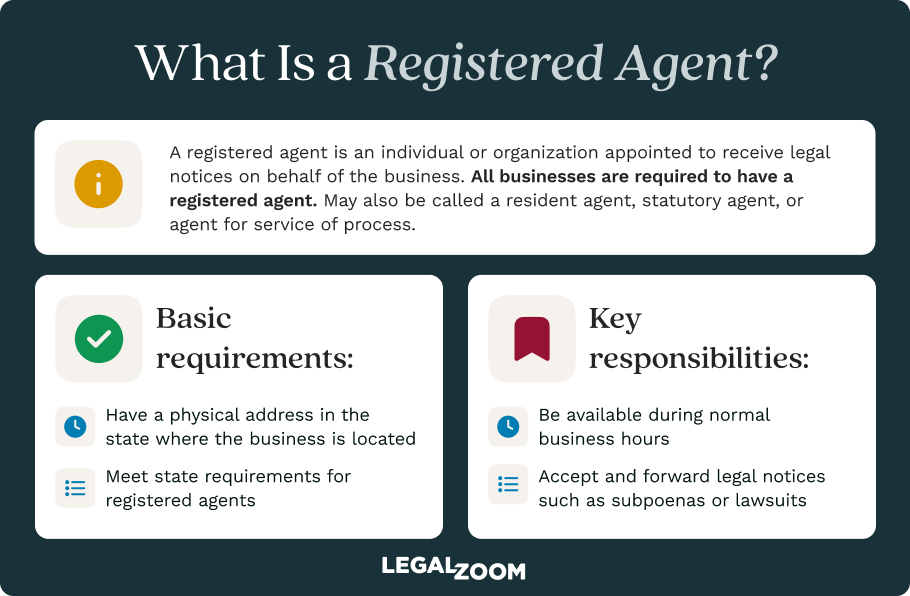
Nevada requires an LLC to continuously maintain a registered agent and registered office in the state. The registered agent receives service of process and official state correspondence, so this is an ongoing compliance role, not just a box to check during formation.
Who can serve as the registered agent?
The agent may be a qualified Nevada resident individual or an authorized business entity with a Nevada office. The registered office must be a physical Nevada address; a P.O. box alone does not satisfy the registered-office requirement. A commercial registered-agent service can help an owner who does not live in Nevada, but the LLC remains responsible for keeping the agent information current.
How do privacy and service of process work?
Using a home or business address may make that address part of the public business record. A commercial agent can provide a different public-facing address and help monitor official notices, but compare the provider’s coverage, renewal terms, and forwarding practices before choosing one.
Step 4: File Nevada articles of organization and related state filings
The articles of organization are the formation document for a Nevada LLC. This step also covers the related Initial List and State Business License filings, so the reader can see the full state setup in one place, while keeping the legal deadlines and purposes of each filing clear.
What do Nevada articles of organization include?
The articles generally identify the LLC, its registered agent, its management structure, its organizer or organizers, and required office information. Decide whether the LLC will be member-managed or manager-managed before filing, because that choice affects the information you provide and how the company will operate internally.
What are the effective date and organizer requirements?
Under NRS 86.201, a Nevada LLC is legally organized when its articles of organization are filed with the Secretary of State and the required filing fees are paid; NRS 86.201 does not provide a delayed effective date for the original articles. At least one organizer signs or submits the formation filing, and the organizer does not necessarily have to be a member or manager. Use the current Secretary of State form when preparing the filing.
What are the initial list and state business license requirements?
The initial list is a separate filing with its own deadline, generally tied to the last day of the month following the month in which the articles are filed. ORION may allow related Nevada business filings to be completed through the state’s current online platform., but “filed together” is not the same as “subject to the same statutory deadline.”
Most businesses also need a State Business License, but exemptions depend on the entity and its facts. If an exemption may apply, use the current Declaration of Eligibility instructions rather than assuming the license is optional or that every exemption claim is handled the same way. LegalZoom’s business license report can help you figure out which licenses you need to apply for.
How do you file, and what are the fees and processing times?
Nevada accepts online filings through the Secretary of State’s ORION portal and also provides mail and in-person options. The articles carry a $75 state fee; the current Initial List and State Business License charges are generally $150 and $200. Standard and expedited processing fees, service levels, and turnaround estimates can change, so confirm them on the Secretary of State’s current fee and processing page before filing.
Most businesses also need a State Business License, but exemptions depend on the entity and its facts. If an exemption may apply, use the current Declaration of Eligibility instructions rather than assuming the license is optional or that every exemption claim is handled the same way. LegalZoom’s business license report can help you figure out which licenses you need to apply for.
Step 5: Create a Nevada LLC operating agreement
Nevada does not require every LLC to file an operating agreement with the Secretary of State. A written agreement is still one of the best ways to document how the members or managers will run the company and what happens when ownership or business circumstances change.
What should a Nevada LLC operating agreement include?
Address ownership percentages, contributions, voting rights, management authority, profit and loss allocations, distributions, transfers, buyouts, new members, and dissolution. Make sure the agreement matches the member-managed or manager-managed structure stated in the articles.
Keep a signed copy in your records. The state won’t accept it or store it, but banks, courts, and investors might ask to see it down the road.
How should you keep the agreement with your business records?
The state generally does not store the operating agreement for you. Keep a signed copy with the company’s records and follow it consistently. The agreement supports organized governance, but it is not a guarantee of liability protection; separate finances, accurate records, and lawful business practices matter too.
Step 6: Get an EIN
An employer identification number (EIN) is a federal tax identifier. The IRS requires one in specified situations, and many LLC owners obtain one because banks, payroll providers, and counterparties commonly request it.
Apply through the IRS after the LLC’s legal name and effective date are settled. You can also let LegalZoom submit the application on your behalf. Keep the IRS confirmation with the company records, and do not assume that obtaining an EIN answers the separate questions of federal tax classification, Nevada tax registration, payroll, or licensing.
Who needs an EIN?
Multi-member LLCs, LLCs with employees, and businesses with certain federal tax obligations generally need an EIN. A single-member LLC that is disregarded for federal income-tax purposes may not need an EIN solely because it was formed, although an EIN can still be useful for banking, hiring, and administration.
Step 7: File the annual list and renew the state business license
After formation, Nevada compliance continues every year. The recurring annual list and state business license renewal are separate from the initial list and initial license application, even when the state presents related tasks together in ORION.
When are the annual list and state business license renewals due, and what do they cost?
The recurring annual list is generally due by the last day of the LLC’s anniversary month. A current fee snapshot is $150 for the annual list and $200 for the state business license renewal when both apply. Confirm the current amounts and exact due date before filing.
How do you maintain good standing, report changes, and reinstate the LLC?
Keep the registered agent, managers, members, and business information current when changes occur. Missing a renewal can lead to late fees, loss of good standing, and eventually administrative dissolution. If the business becomes delinquent, use the current Secretary of State reinstatement process rather than assuming one late payment restores every status.
Starting a business takes courage. LegalZoom makes sure the legal details don’t stand in your way, from the day you register until the day you retire.

Nevada LLC taxes and licenses
Nevada’s lack of a broad individual or corporate income tax does not mean an LLC has no tax or licensing obligations. What applies depends on the business’s activities, Nevada revenue, employees, customers, property, and operations in other states.
Businesses selling taxable goods or services may need sales and use tax registration. Local business licenses, health or building approvals, industry permits, and professional board requirements can apply even after the LLC is formed. Check the agencies that regulate the actual business activity and location.
Do Modified Business Tax and Commerce Tax apply?
An employer with Nevada payroll may have Modified Business Tax responsibilities based on its payroll and the current exemption, rate, and filing rules. Commerce Tax uses Nevada gross revenue and has its own statutory threshold and Department of Taxation instructions. Do not tell every LLC below the threshold to file an annual confirmation unless the current agency guidance requires it for that taxpayer.
What other state and federal obligations apply?
An LLC formed in Nevada may need to foreign-qualify, pay taxes, or obtain licenses in another state where it actually operates. Federal income tax, self-employment tax, employment tax, and information-reporting requirements are separate from Nevada formation filings.
The risks of filing a Nevada LLC yourself
Nevada formation is manageable, but small timing and classification mistakes can create avoidable costs or compliance problems.
- Treating the initial list as due with the articles can create the wrong deadline. Nevada provides a separate initial-list deadline even though ORION may let a filer complete related tasks in one session.
- Assuming every LLC has the same state business license obligation can produce an incorrect exemption filing. Check the current Nevada exemption rules and Declaration of Eligibility against the entity’s actual facts.
- Assuming Nevada’s lack of a broad individual or corporate income tax eliminates other taxes is risky. Sales/use tax, Modified Business Tax, Commerce Tax, federal tax, and other-state obligations may still apply.
- Using a registered agent who cannot reliably receive service of process can jeopardize compliance. Keep the Nevada registered office and agent information current.
- Missing the annual list for state business license renewal can lead to late fees and loss of good standing. Calendar the anniversary-month deadline and verify the entity’s status after filing.
Start your Nevada LLC with LegalZoom
Starting a Nevada LLC is a big step, but you don’t have to manage every form and deadline on your own. LegalZoom’s LLC formation services can help you set up your business and move forward with more confidence.
Our plans start at $0 plus state filing fees, so you can choose the level of support that fits your needs and add services as your business grows. With the paperwork organized in one place, you can spend less time sorting through formation requirements and more time building your business.
Find the right state to form an LLC
Find the right state to form an LLC
Every state has different rules, costs, and considerations for LLC formation.


Nevada LLC FAQs
Can a nonresident or out-of-state owner form a Nevada LLC?
Nevada does not generally require an LLC member to live in Nevada. A nonresident owner still needs a qualified Nevada registered agent and may need to register the business in another state where it actually operates. Forming in Nevada does not, by itself, eliminate another state’s foreign-qualification, tax, licensing, or employer obligations.
When does a Nevada LLC become effective?
Under NRS 86.201, a Nevada LLC is legally organized when its articles of organization are filed with the Secretary of State and the required filing fees are paid; NRS 86.201 does not provide a delayed effective date for the original articles. The initial list and state business license filings are separate compliance obligations and should not be described as the event that creates the LLC.
How do you correct an error in your articles of organization?
The right filing depends on whether the error was caught before submission, whether the articles are already effective, and what information needs to be changed. Check the current Nevada Secretary of State forms for an amendment, correction, or other filing that matches the situation rather than treating a Certificate of Amendment as the universal fix.
How do you dissolve a Nevada LLC?
Use the current Nevada dissolution filing and complete the business’s winding-up, tax, license, contract, and recordkeeping steps. Check the entity’s status and any delinquent filings before representing that the LLC has been fully closed or restored to good standing.


